The Short Answer: Does AncestryDNA Ship to Ukraine?
As of 2026, AncestryDNA does not list Ukraine among its direct shipping destinations, and this has not changed since before the full-scale invasion in 2022. Ancestry's international shipping list is limited to a specific set of countries, and Ukraine has never appeared on it, even in the years before the war. This is a common point of confusion: many researchers assume the current restriction is a wartime measure, when in fact Ancestry's kit logistics network simply was never built to reach Ukraine directly, for the same reasons it does not reach a number of other Eastern European and non-EU countries.
MyHeritage DNA and FamilyTreeDNA have historically had somewhat broader international shipping lists than Ancestry, but both companies have also excluded or restricted Ukraine as a direct-ship destination, particularly since 2022, when courier services (DHL, FedEx, UPS) sharply curtailed or suspended standard consumer parcel delivery into Ukrainian territory due to the war. The practical result is the same across all three major providers: a saliva or cheek-swab kit purchased online generally cannot be mailed straight to a home address inside Ukraine.
This does not mean DNA testing connecting Ukrainian and Canadian relatives is impossible — it means the logistics have to run through a different path, which the rest of this guide explains. For background on why DNA testing matters in the first place for Ukrainian-Canadian research, see our companion article on Ukrainian DNA testing and AncestryDNA basics.
Why Direct Kit Shipping to Ukraine Is Restricted
Several overlapping factors explain why consumer DNA companies have not built reliable shipping into Ukraine, and why the situation has only become more difficult since 2022.
- Courier network disruption: Major international couriers reduced or suspended standard residential delivery service to large parts of Ukraine after the invasion, and service that does exist is often inconsistent, delayed, or limited to specific cities.
- Biological material handling: Even in peacetime, shipping human biological samples (saliva, buccal swabs) across borders involves customs classifications that some postal systems are not set up to process smoothly for a low-volume consumer product.
- Company-specific coverage lists: Each testing company independently decides which countries it will ship kits to and receive samples from, based on postal reliability, customs partnerships, and demand. Ukraine has historically sat outside these lists for most major providers.
- Return-leg uncertainty: Even if an empty kit could be delivered, the bigger obstacle is often the return leg — getting the collected saliva sample back out of Ukraine and into the lab's home country within the sample's viability window.
Researchers should treat this as a structural limitation of the consumer DNA testing industry rather than a temporary inconvenience that will necessarily resolve once conditions stabilize. Even before 2022, family historians researching Ukrainian migration from Galicia to Canada reported similar shipping gaps when trying to test relatives who remained in western Ukraine.
Comparing Provider Shipping Policies
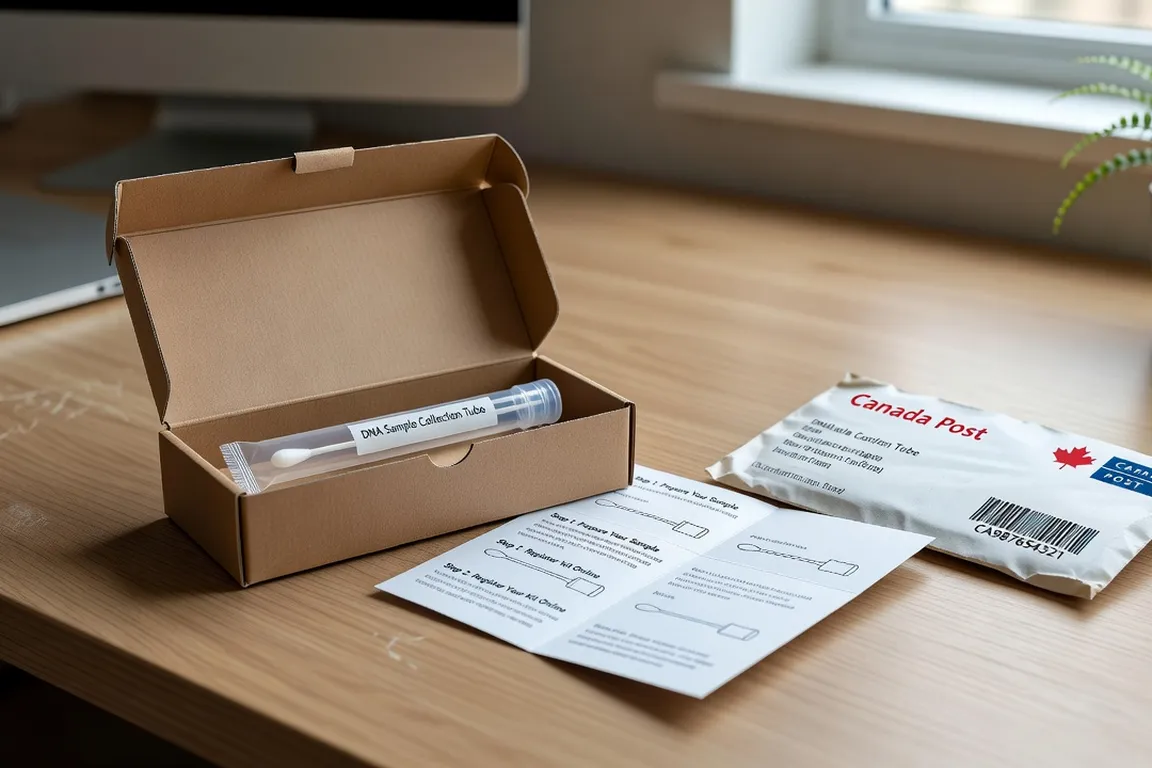
The table below summarizes how the three major consumer DNA testing companies generally handle international shipping relevant to Ukraine-based relatives, based on their published international shipping destination lists as of 2026. Always verify current policy directly on each company's website before purchasing, since shipping lists are updated periodically without much public notice.
| Provider | Ships Directly to Ukraine | Nearby Alternative Destinations | Best Use Case |
|---|---|---|---|
| AncestryDNA | No | Poland, Romania, Slovakia (EU members) | Test the Canadian side; use a third-country meetup for the Ukrainian side |
| MyHeritage DNA | No (suspended for the region) | Wider EU coverage, some Eastern European countries | Slightly broader EU shipping if a relative can travel to a border country |
| FamilyTreeDNA | No | EU and select non-EU countries | Good option when a relative already has EU residency or dual citizenship |
| 23andMe | No | Limited international list overall | Least relevant for cross-border Ukraine testing |
Note that "ships to" and "will process a sample originating from" are two different questions. A company may not ship a kit to a Ukrainian address, yet may still accept and process a sample if it is mailed to the lab from a country that is on its outbound list, such as Poland or Canada. That distinction is the basis for most of the practical workarounds described later in this guide.
Customs Rules and Biological Samples: What Actually Happens
Even where a courier technically offers delivery into Ukraine, biological samples can trigger additional customs scrutiny that ordinary parcels do not. A DNA collection kit itself — the plastic tube, stabilizing buffer, and packaging — is not usually treated as a hazardous or restricted good, but customs officers unfamiliar with direct-to-consumer genetic testing kits have occasionally held or queried such parcels, adding delays of weeks rather than days.
Common mistake: Assuming that because a kit is "just saliva in a tube," it will move through customs like any ordinary letter. Declared contents matter. A parcel vaguely marked or undeclared is more likely to be flagged than one accompanied by clear, accurate customs paperwork describing a non-hazardous DNA collection kit for genealogical research.
Wartime conditions compound these delays substantially. Postal and courier infrastructure inside Ukraine has been disrupted by damage to transport routes, security screening requirements, and reduced staffing in some regions, meaning that even parcels that are not DNA-related can take considerably longer than pre-2022 timelines. Researchers should build in a wide buffer — think months, not weeks — for any physical shipment attempted into or out of the country during the current period.
It is also worth remembering that sample viability is time-limited. Most saliva-based collection kits use a stabilizing solution designed to preserve DNA at room temperature for a defined window, typically several months, but prolonged transit combined with temperature extremes (a real risk in an unheated postal facility in winter) can degrade sample quality enough to cause a lab processing failure, requiring a re-test from scratch.
Practical Workarounds for Testing a Relative in Ukraine
Given the shipping limitations above, most successful cross-border DNA connections between Canadian and Ukrainian family members rely on one of a few practical strategies rather than a direct kit mailing.
- Third-country collection. If the Ukrainian relative has traveled to or has contacts in a neighbouring EU country (Poland, Romania, Slovakia, Hungary), a kit can often be shipped to that address instead, since these countries are on most providers' standard shipping lists.
- Diaspora network relay. Many Ukrainian community organizations in Canada, the United States, and the EU maintain informal contact with relatives or volunteers who periodically travel between Ukraine and a neighbouring country, and who may be willing to carry a small kit across the border as part of a personal trip.
- Wait for a scheduled visit. If a family member already plans to visit Canada or an EU country, bringing an unused kit for the return trip and collecting the sample there before mailing it back is often more reliable than attempting international shipping in either direction.
- Test the Canadian-side relatives first. Building out the Canadian branch of the family tree through DNA matches can sometimes surface distant cousins who have already tested and who share the same Ukrainian ancestral lines, reducing the urgency of testing someone currently inside Ukraine.
Whichever approach is used, always confirm the receiving lab's current international policy before the trip or relay is arranged, since these lists are revised periodically and a plan built around outdated information can waste both the kit and the traveler's time. For readers just beginning to build out their family tree structure before adding DNA evidence, our overview on how to start Ukrainian genealogy research is a useful starting point.
Reversing the Route: Shipping a Kit Into Canada or the EU
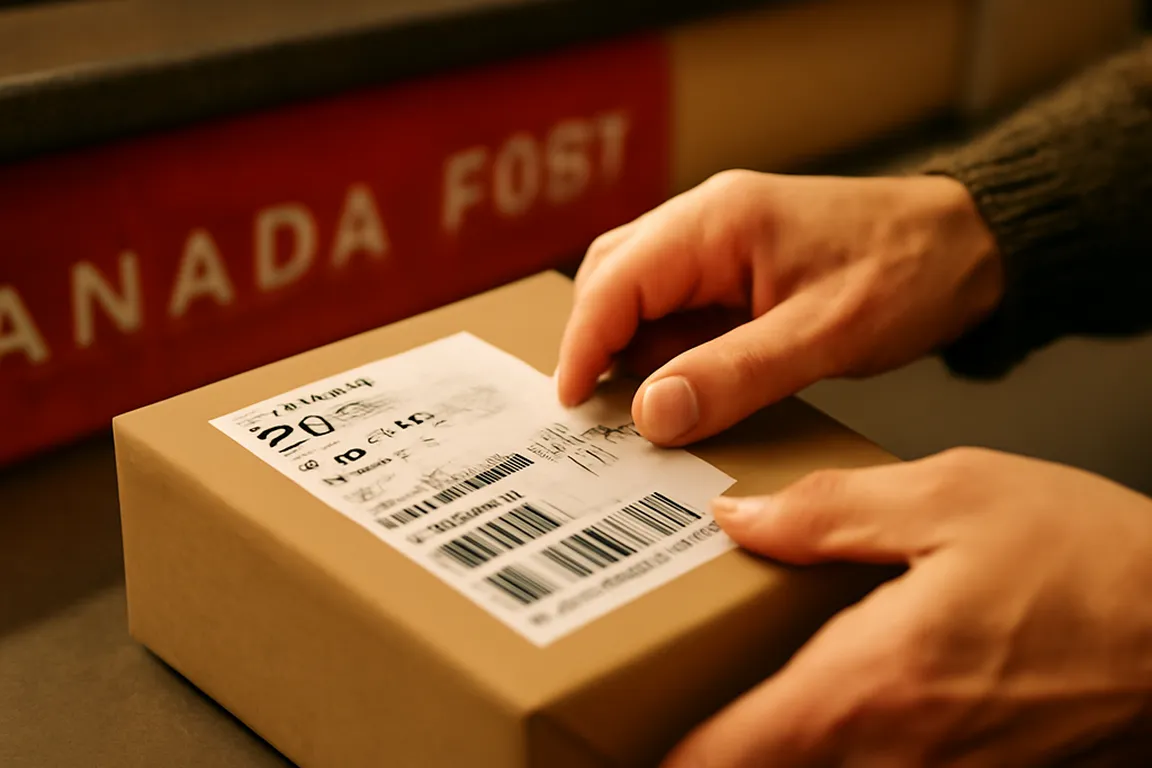
An easier and more reliable variation on the workaround above is to have the Ukrainian relative's sample processed entirely outside Ukraine, using a kit that never has to cross the Ukrainian border in the first place. In practice, this usually means one of the following:
- Purchasing the kit in Canada or the EU and having it collected in person when the relative visits, then shipping the completed sample from that same country back to the lab — the kit never enters Ukraine at all.
- Coordinating with a relative who already resides in or near an EU country with reliable postal service, so both the outbound kit and the return sample travel entirely within well-served shipping corridors.
- Using a volunteer courier or diaspora relay only for the short cross-border leg (Ukraine to Poland, for example), with the longer international leg handled entirely from EU territory.
This approach minimizes the amount of time a biological sample spends in transit through disrupted postal infrastructure, which is generally the single largest risk factor for a failed or degraded test. It also sidesteps the customs uncertainty described earlier, since the parcel's origin and destination are both countries with established, well-documented shipping relationships with the testing companies.
After the Sample Is Collected: Getting It Back to the Lab
Once a sample has been successfully collected — whether inside Ukraine, at a border crossing, or in a neighbouring country — the return shipment to the processing lab is usually the more straightforward half of the journey, provided it originates from a country on the provider's standard shipping list. Track the parcel using the courier's tracking number, and keep the kit's activation code and any prepaid shipping label paperwork in a separate safe location in case the physical documents are lost or damaged in transit.
Processing times can run longer than the standard published estimate for a domestic Canadian or US sample, since international-origin samples sometimes require additional intake verification. Researchers report that setting expectations for an extra two to four weeks beyond the provider's usual turnaround avoids unnecessary anxiety while waiting for results. If a kit is delayed significantly beyond the provider's estimate, contacting customer support with the tracking number is generally more productive than resubmitting a new kit, which only compounds the cost and delay.
Common Mistakes Researchers Make With Cross-Border Kits
A handful of avoidable errors account for most of the frustration researchers report when trying to arrange DNA testing across the Canada-Ukraine corridor.
Tip: Before purchasing a kit for a relative in Ukraine, check the provider's current international shipping page directly rather than relying on older forum posts or outdated blog articles, since shipping lists change and pre-2022 information is often no longer accurate.
- Purchasing a kit and attempting to ship it directly to a Ukrainian address without first confirming the provider's current shipping list, resulting in a stalled or returned order.
- Assuming a kit that reached a relative once (perhaps years ago, before 2022) will still ship the same way today — wartime disruptions have materially changed courier reliability.
- Underestimating the sample's viability window and allowing too much time to pass between collection and shipment back to the lab.
- Failing to declare the kit's contents clearly on customs paperwork, increasing the likelihood of a hold at a border crossing.
- Not keeping a backup plan (a second kit, a rescheduled relay) in case the first shipping attempt fails or the parcel is lost.
Cross-border DNA logistics during the current period require more patience than a typical domestic order, but many Ukrainian-Canadian families have still succeeded in connecting branches of their tree through a third-country relay or a well-timed visit. Combining DNA results with documentary research — parish registers, homestead files, and passenger lists — remains the most reliable way to confirm a connection once genetic matches appear. Readers assembling this kind of documentary evidence alongside DNA results may also find our guide to Ukrainian church records for genealogy useful, along with the guide to reading old Cyrillic church records for interpreting any village-of-origin details a DNA match's family tree might reference. For a wider set of free tools to cross-reference matches, see our list of top free Ukrainian genealogy websites and databases.
The bottom line for anyone searching "does AncestryDNA deliver tests to Ukraine" is straightforward: not directly, and this predates the current war. The workable path in almost every case runs through a neighbouring country, a diaspora relay, or timing the sample collection around an in-person visit. With a bit of extra planning, DNA testing can still play a meaningful role in confirming a Ukrainian-Canadian family's ancestral connections, even while direct shipping into Ukraine remains unreliable.
Frequently Asked Questions
No. AncestryDNA does not include Ukraine on its list of direct international shipping destinations, and this was true even before the 2022 invasion. Researchers typically need to ship a kit to a neighbouring country such as Poland or Romania, or wait for an in-person visit, to test a relative currently in Ukraine.
Direct shipping is unreliable at best. Major couriers have reduced or suspended standard residential delivery to large parts of Ukraine since 2022, and consumer DNA companies generally do not list Ukraine as a shipping destination even under normal conditions. A third-country relay or an in-person visit is the more dependable option.
The most reliable alternatives are shipping the kit to a neighbouring EU country such as Poland, Romania, or Slovakia where the relative can collect the sample, using a diaspora contact who travels across the border periodically, or waiting for a planned in-person visit to Canada or the EU to collect and ship the sample from there.
The kit itself is not typically classified as hazardous, but unclear customs declarations can cause delays at the border. Wartime conditions in Ukraine add further unpredictability, including damaged transport routes and reduced postal staffing, so parcels should be clearly declared and researchers should expect significantly longer transit times than usual.
Most saliva-based collection kits use a stabilizing solution designed to preserve the sample at room temperature for several months, but extended transit combined with temperature extremes can degrade sample quality. Minimizing time in transit, particularly through disrupted postal networks, reduces the risk of a failed test that requires re-collection.