1. Ukrainian Christmas Traditions
Christmas is a unique and festive holiday among Ukrainians. The season starts with a short and severe Lent. On December 19th, presents are distributed to children by St. Nicholas, the patron saint of children. This custom continues to this day in many Ukrainian communities across Canada and around the world.
Ukrainians cherish Christmas Eve in a special way. The celebration is centred around the traditional Christmas Eve Holy Supper which begins when the first star appears in the eastern sky. It is the children’s job to look for the first star, a task that builds anticipation and excitement for the sacred meal to follow.
2. Preparing the Christmas Eve Table
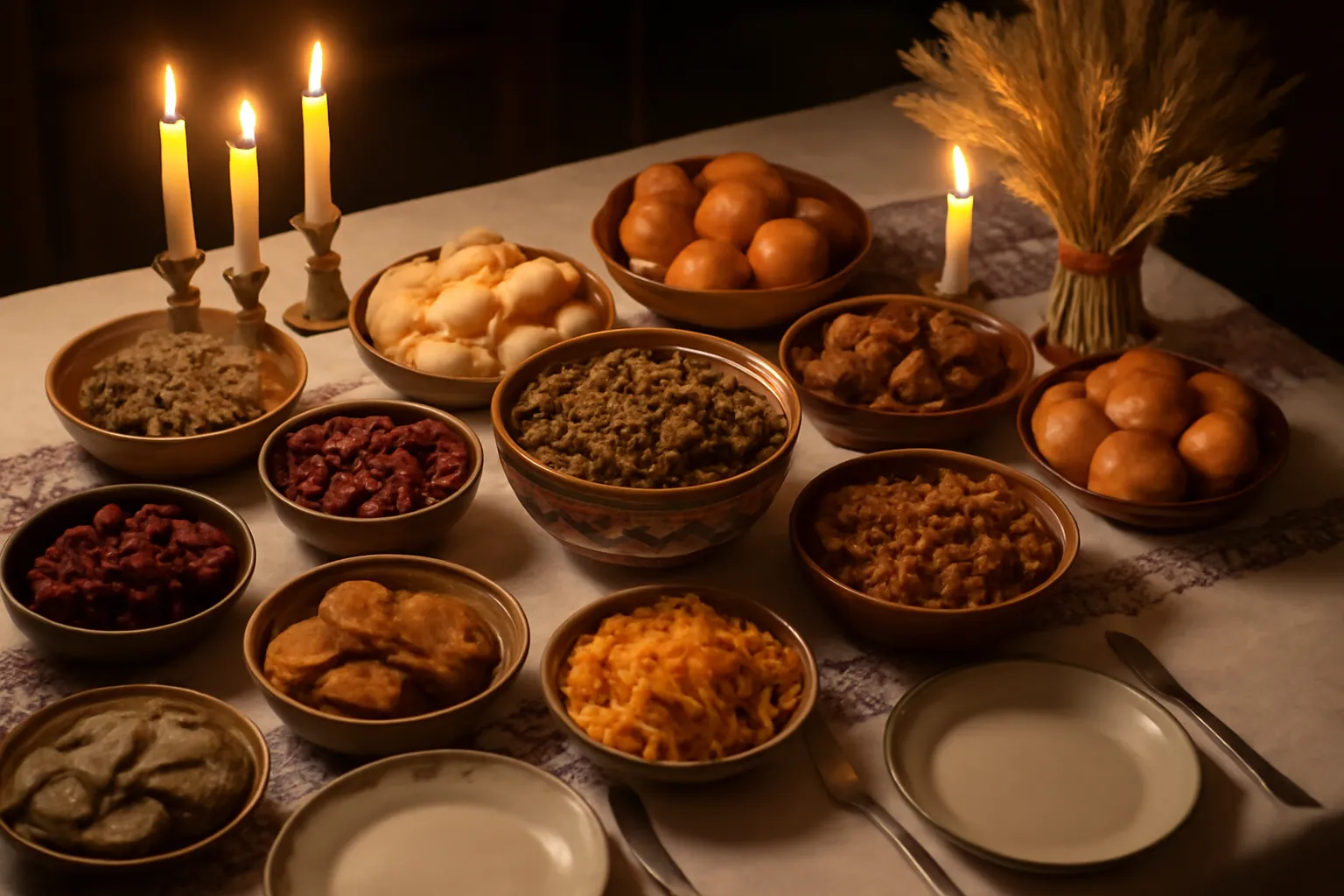
The preparation of the Christmas Eve table follows centuries-old traditions, each element carrying deep symbolic meaning:
- The floor is covered with straw and upon the table is placed clean, fresh hay, recalling the birth of Christ in the stable
- A white or embroidered table cloth is spread over the hay
- A sheaf of grain (diduh) is placed in the corner under the Icons as a sign of a good harvest
- An axe is placed outside the door to ward off evil spirits
- An extra table setting is placed for departed family members, and also serves as a reminder that a passing stranger is welcome
- Burning incense is placed on the table, signifying the gift of the Magi
3. The Kolach Bread
A special loaf of bread called a Kolach is placed on the table, with a lighted beeswax candle placed in its centre. This is to remind the family of the Star of Bethlehem. The Kolach is braided from three pieces of dough to signify the Holy Trinity.
The Kolach is one of the most recognizable symbols of Ukrainian Christmas and is treated with great reverence. It is usually eaten after the midnight liturgy or mass, marking the transition from fasting to celebration.
4. The Twelve-Dish Holy Supper
The supper consists of a variety of twelve dishes as a symbol that Christ has twelve apostles. Meat and dairy products are not permitted during this sacred meal. All stand by their places at the table while the oldest member of the family begins the prayers. All sing a carol, then sit down to eat.
The Kutia Tradition
Before the family begins to eat, the father takes a spoon of Kutia (wheat grain mixture) and throws it to the ceiling. If the grain stays up, the family will have a good and prosperous year. This custom is usually skipped in modern times, for practical reasons!
The Toast
A bottle of horiwka (vodka) is chilled in a snowbank. If you do not live on the Canadian prairies where the temperature is the requisite -30 Celsius, you can put the vodka in the freezer, along with small shot glasses. The head of the household then extends best wishes and greetings with “Khrystos Rodyvsya” (Christ is born). The reply is “Slavim Yeho” (Praise him). The vodka is then downed in one gulp.
5. Traditional Christmas Eve Menu
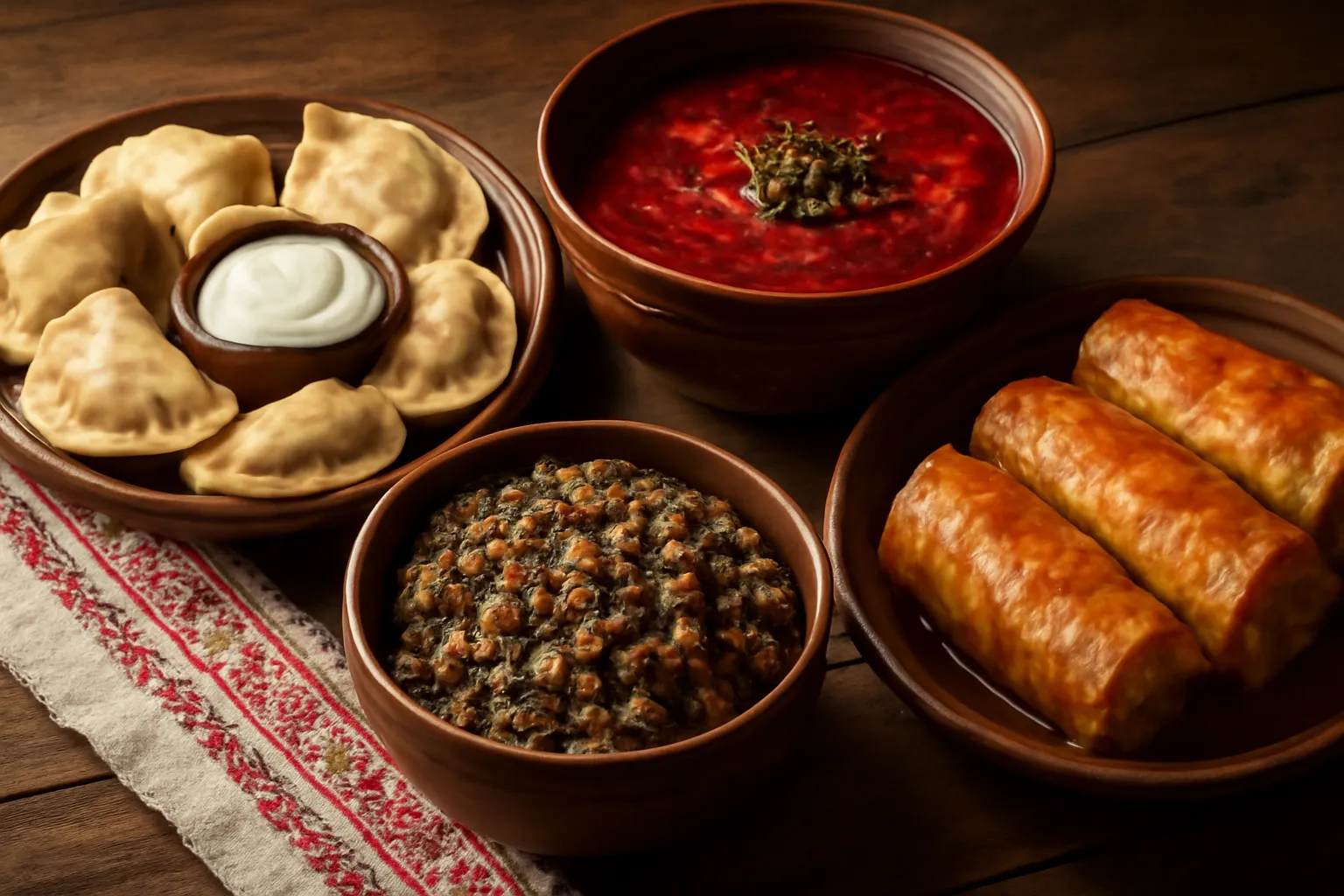
It is the custom that twelve various dishes are served to remind us of the 12 Apostles. No meat products, and in some regions no dairy products, are permitted.
Ritual Foods
- Kutia — boiled wheat kernels mixed in honey and poppy seeds
- Kolach — ritual bread, usually eaten after midnight liturgy/mass
- Knysh — another traditional bread
Appetizers and Pickles
- Pickled herring
- Dill pickles
- Pickled mushrooms
- Pickled beets
- Meatless borscht
Main Courses
- Fish in one or more forms: fried, baked, broiled, or stuffed
- Fish in aspic
- Fish balls
- Herring
- Varenyky and pyrohy with various fillings: potato, sauerkraut, fruit (prune)
- Meatless holubtschi with rice or buckwheat filling
Vegetables
- Pidpenky — mushrooms in gravy
- Sauerkraut with peas
- Fasoli — mashed beans
- Beans in mushroom sauce
- Beets: baked, broiled, in piquant sauce, or with mushrooms
Desserts
- Compote of stewed dried fruit
- Pyrohy with prune or poppy seed filling
Baked Items (Served after Midnight Mass)
- Pampushky — plain, with poppy seed or fruit filling
- Makivnyk — poppy seed roll
- Horichkovnyk — nut roll
- Perishky — various fillings
- Medivnyk — honey cake
- Honey and sugar cookies
- Khrustyky
- Fruit or nut filled pastries
6. Christmas Carolling (Koliady)
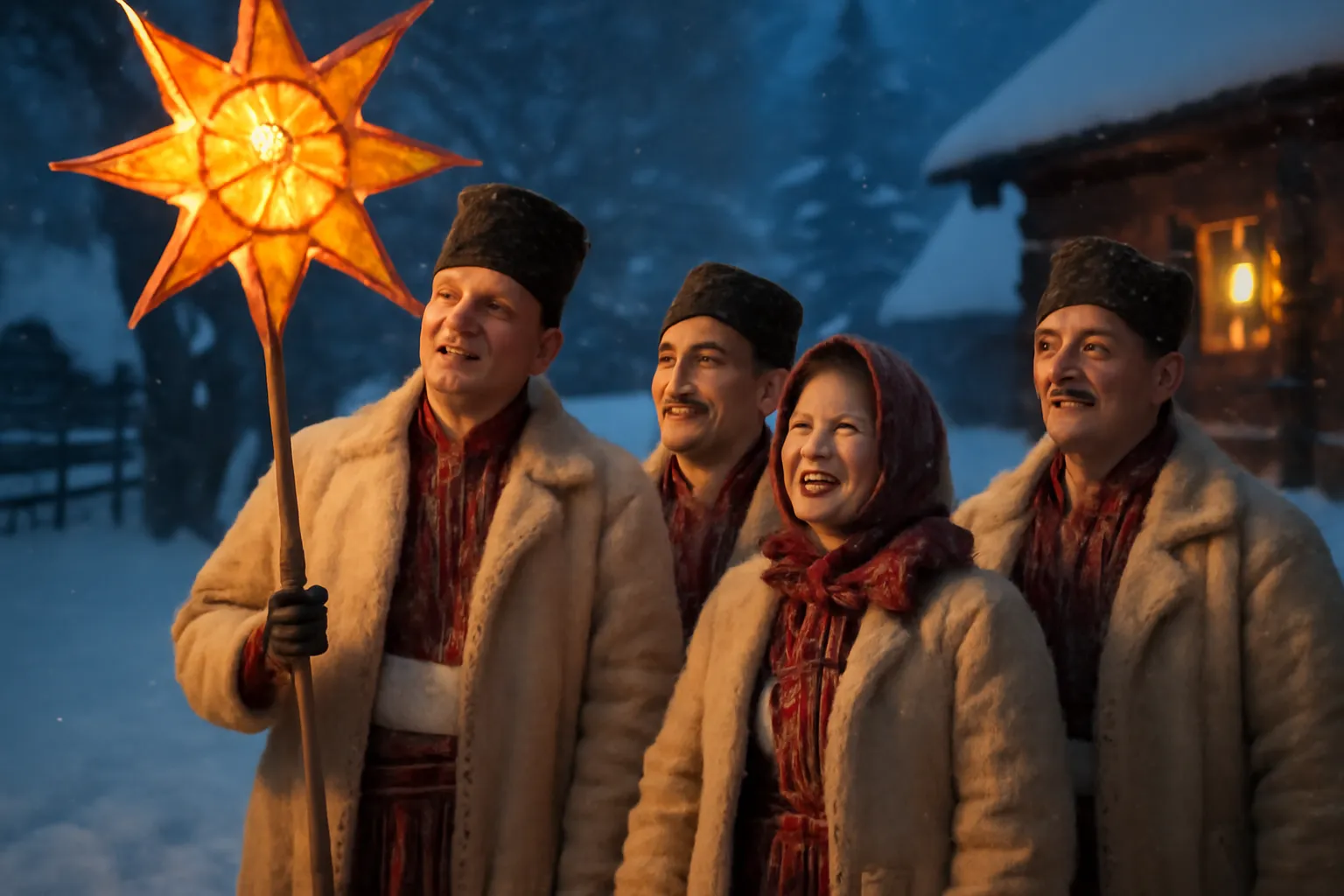
During the supper it is the custom for carollers to enter the home and wish the family happiness and blessings of the Infant Child by singing carols known as Koliady. The carollers carry a little grotto in which are the manger, the shepherds, and the new-born infant Jesus placed under a star.
The star is mounted upon a rod with a lighted candle placed inside. The star reminds the people of the star that shone over the stable where Christ was born. The carollers represent the angels and the shepherds. After supper the family spends a pleasant evening carolling and preparing for Midnight Mass.
7. The Yalynka — Ukrainian Christmas Tree
The Yalynka or Christmas Tree is decorated in a manner similar to most countries. Decorations can be made of wood, straw, or dough which is decorated, glazed, and baked.
One beloved variation is the Children’s Tree. A small tree under one metre is set up for the children, who then make decorations during the season and add them to the tree. Candy canes and treats are put on by the parents, along with Advent sweets or chocolates that are wrapped, numbered, and placed on the tree for each child.
It is also a custom to add decorations given as presents to the family tree each year. An added bonus is that this creates a collection of Christmas decorations for children to take with them when they go away to university or move out on their own.
8. The Feast of Jordan — Epiphany (January 19th)
On January 19th, the Feast of Jordan or Epiphany is celebrated, symbolizing the baptism of Christ in the river Jordan. Ukrainians gather in front of the church where a cross of ice is placed. A tub filled with water is placed in front of the ice cross, and during special services the water is blessed.
The faithful bring the blessed water home to be taken before breakfast. The remains are kept during the year to protect the home from fire, lightning, and sickness. The priest visits parishioners to bless their homes with the Holy Water.
The evening meal is very much a repeat of the Holy Supper except that there are no restrictions on meat and dairy products. It starts with Kutia saved from Christmas Eve. And with that, the Christmas season is over until next year.
These Christmas traditions are part of a broader cultural heritage shared by Ukrainians worldwide. For a deeper look at the relationship between France and Ukraine in preserving these traditions, this resource on Franco-Ukrainian cultural ties provides additional context.
9. Important Dates in the Ukrainian Calendar
- Saint Nicholas Day — December 19th: gifts for good children
- Christmas Eve (Holy Night) — January 6th
- Malanka (New Year’s Eve) — January 13th
- Feast of Jordan / Epiphany — January 19th
- Ukrainian Independence Day — August 24th
- Velykyi Den’ (Easter) — date varies by year (Julian calendar)
Frequently Asked Questions
Ukrainian Christmas Eve (Holy Night) is celebrated on January 6th, following the Julian calendar. Saint Nicholas Day is December 19th, Malanka (New Year's Eve) is January 13th, and the Feast of Jordan/Epiphany is January 19th.
The twelve dishes symbolize the twelve apostles and include Kutia (wheat and honey), Kolach bread, pickled herring, meatless borscht, various fish preparations, varenyky and pyrohy, meatless holubtschi, mushrooms in gravy, sauerkraut with peas, beans, beets, and compote of stewed dried fruit.
Kutia is a mixture of boiled wheat kernels with honey and poppy seeds. It is the first dish served at the Christmas Eve Holy Supper and holds deep ritual significance. Traditionally, the father throws a spoonful to the ceiling — if the grain sticks, the family will have a prosperous year.
Kolach is a special braided bread placed on the Christmas Eve table with a lighted beeswax candle in its centre, symbolizing the Star of Bethlehem. It is braided from three pieces of dough to signify the Holy Trinity.