1. A Small Province, a Proud Community
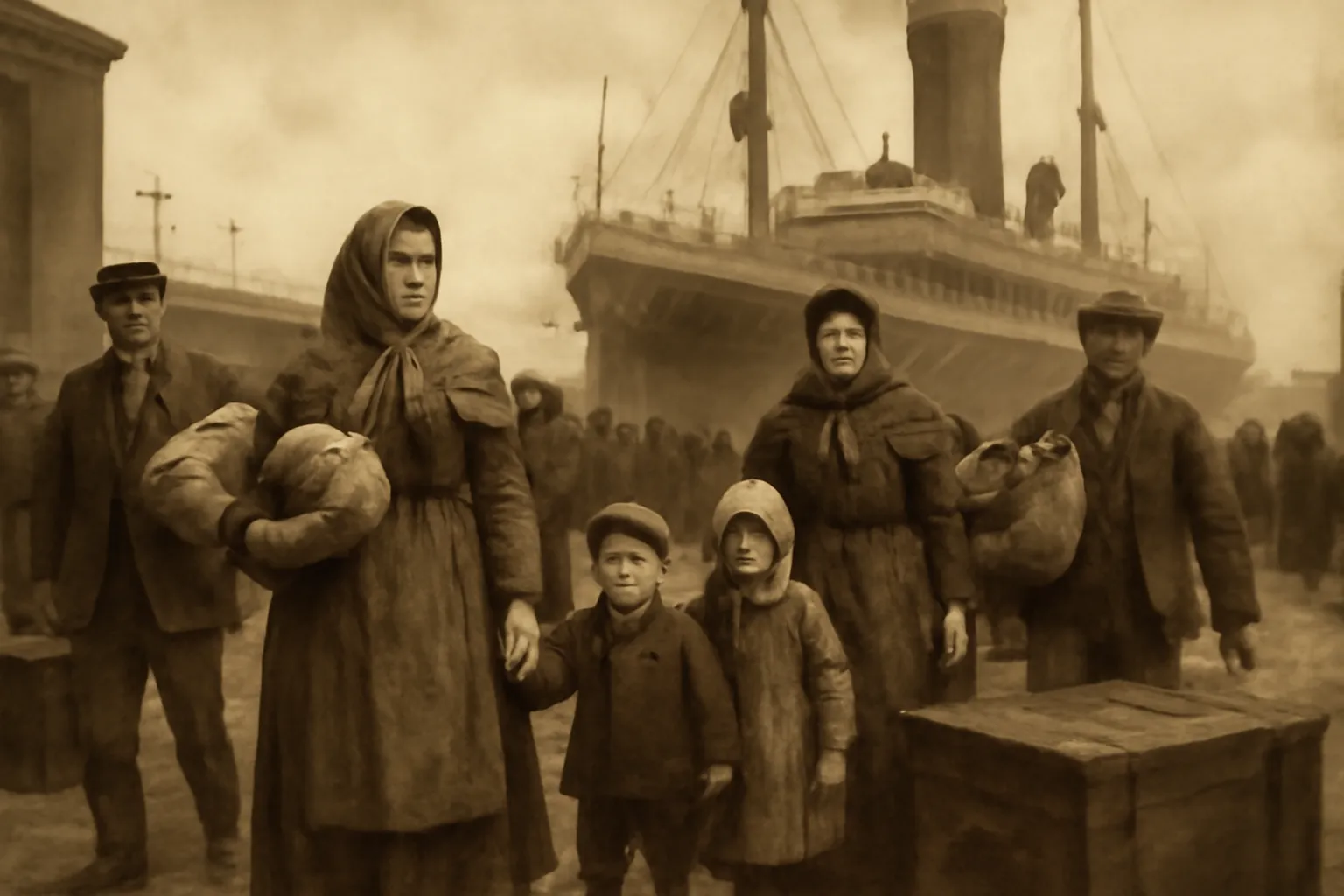
When people think of Ukrainian settlement in Canada, they typically picture the vast prairies of Manitoba, Saskatchewan, and Alberta — the great wheat-growing provinces where hundreds of thousands of Ukrainian immigrants built new lives on homestead land. Far fewer people know that Prince Edward Island, Canada’s smallest province, also became home to a determined community of Ukrainian settlers whose story deserves to be told.
Though small in number compared to their prairie counterparts, the Ukrainians who came to PEI brought the same resilience, faith, and cultural pride that defined Ukrainian communities across Canada. Their descendants remain on the island today, carrying forward traditions that stretch back to ancestral villages thousands of kilometers away.
2. The Old Country — Why They Left
To understand why Ukrainian families chose to cross the Atlantic, one must understand the conditions they left behind. The vast majority of PEI’s Ukrainian settlers came from two regions of the Austro-Hungarian Empire: Galicia (Галичина) and Bukovyna (Буковина).
Life in Galicia
Galicia — encompassing what is now the Lviv, Ternopil, and Ivano-Frankivsk oblasts of western Ukraine — was one of the poorest provinces of the Austro-Hungarian Empire. By the late 1800s, the region faced severe overpopulation relative to available farmland. Peasant families worked small plots that were repeatedly subdivided among sons with each generation, until many holdings were too small to sustain a family.
Taxation was heavy, opportunities for education limited, and political power remained in the hands of Polish landowners and Austrian administrators. For an ambitious young farmer with little land and no prospects, emigration to Canada — where the government was offering free 160-acre homesteads — was an irresistible opportunity.
Life in Bukovyna
Bukovyna, to the southeast of Galicia (now Chernivtsi oblast), faced similar economic pressures. Its Ukrainian population lived alongside Romanians, Jews, Germans, and Poles in a complex multi-ethnic society. Land shortages, poverty, and limited social mobility drove many Bukovynian families to join the emigration movement.
For those inspired to visit the ancestral villages in Ukraine, Ukraine Trips provides travel guides and practical information for heritage tourism. Walking the streets of your great-grandparents’ village is an experience that transforms genealogy from an academic exercise into something deeply personal.
3. The Journey to Prince Edward Island
The Waves of Immigration
Ukrainian immigration to Canada occurred in several distinct waves, as documented in our Ukrainian immigration to Canada timeline:
- First Wave (1891-1914): The largest pre-war migration, driven by economic hardship. Most settlers went to the prairies, but some found their way to Atlantic Canada.
- Second Wave (1920-1939): After World War I and the brief Ukrainian independence period, a second wave of immigrants arrived. Some came to PEI during this period.
- Third Wave (1945-1955): Displaced persons fleeing the aftermath of World War II and Soviet occupation. A small number settled on PEI.
Why PEI?
The question of why some Ukrainians chose PEI over the prairies has several answers. Some were drawn by chain migration — a relative or acquaintance who had already settled on the island wrote home encouraging others to follow. Others arrived through labor recruitment programs that directed immigrants to areas needing agricultural workers. A few came to PEI after initially settling elsewhere in Canada, attracted by the island’s farming potential and tight-knit communities.
PEI offered fertile farmland, though in much smaller parcels than the vast prairie homesteads. The island’s economy, based on agriculture, fishing, and forestry, provided familiar occupations for families accustomed to working the land.
4. Pioneer Life on the Island
Farming and Fishing
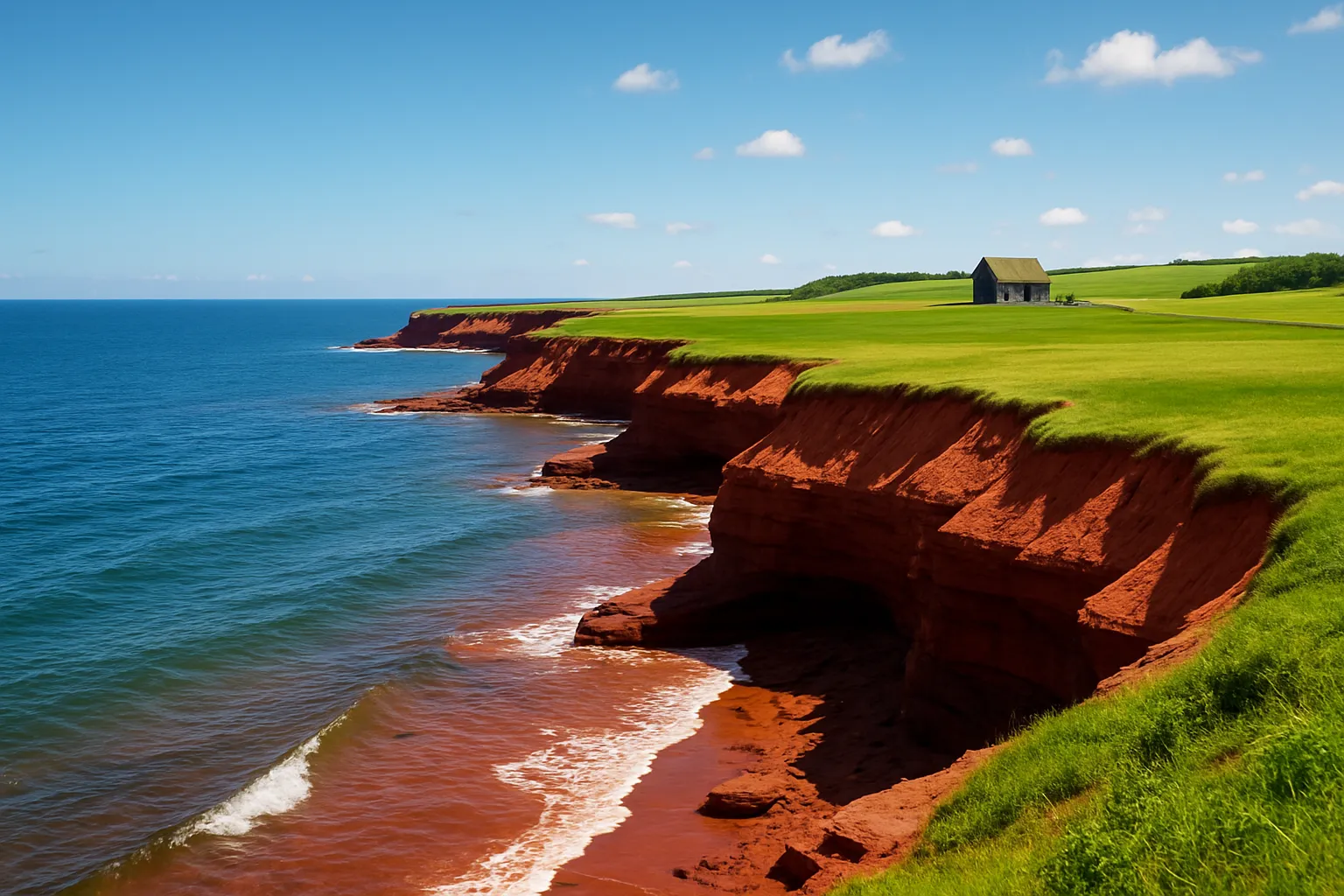
The Ukrainian settlers on PEI adapted their agricultural skills to the island’s conditions. The red soil of Prince Edward Island proved excellent for growing potatoes, grain, and root vegetables — crops familiar to anyone from the farmlands of Galicia. Many families also kept dairy cattle, pigs, and poultry, maintaining the mixed-farming tradition they had practiced in the old country.
Some Ukrainian families also took up fishing, a livelihood that was new to most immigrants from landlocked Galician villages. The surrounding waters of the Gulf of St. Lawrence offered abundant catches of lobster, cod, and herring, and Ukrainian families gradually entered this industry alongside the island’s established fishing families.
Building a Home
The first years were the hardest. Immigrant families often arrived with very little money and had to build their homes and barns from scratch. Early dwellings were modest — simple frame houses that were gradually expanded and improved as the family became more established. The women maintained large vegetable gardens, preserved food for the long winters, and maintained the cultural traditions of the household.
Unlike on the prairies, where Ukrainian settlers often lived in isolated homesteads miles from their nearest neighbor, PEI’s smaller scale meant that Ukrainian families lived in closer proximity to their English, Scottish, Irish, and Acadian neighbors. This proximity accelerated integration while also making it harder to maintain a distinct Ukrainian cultural identity.
The Role of the Church
For Ukrainian settlers everywhere in Canada, the church was the center of community life, and PEI was no exception. Ukrainian families on the island were predominantly Greek Catholic (Ukrainian Catholic), reflecting the religious tradition of their Galician homeland.
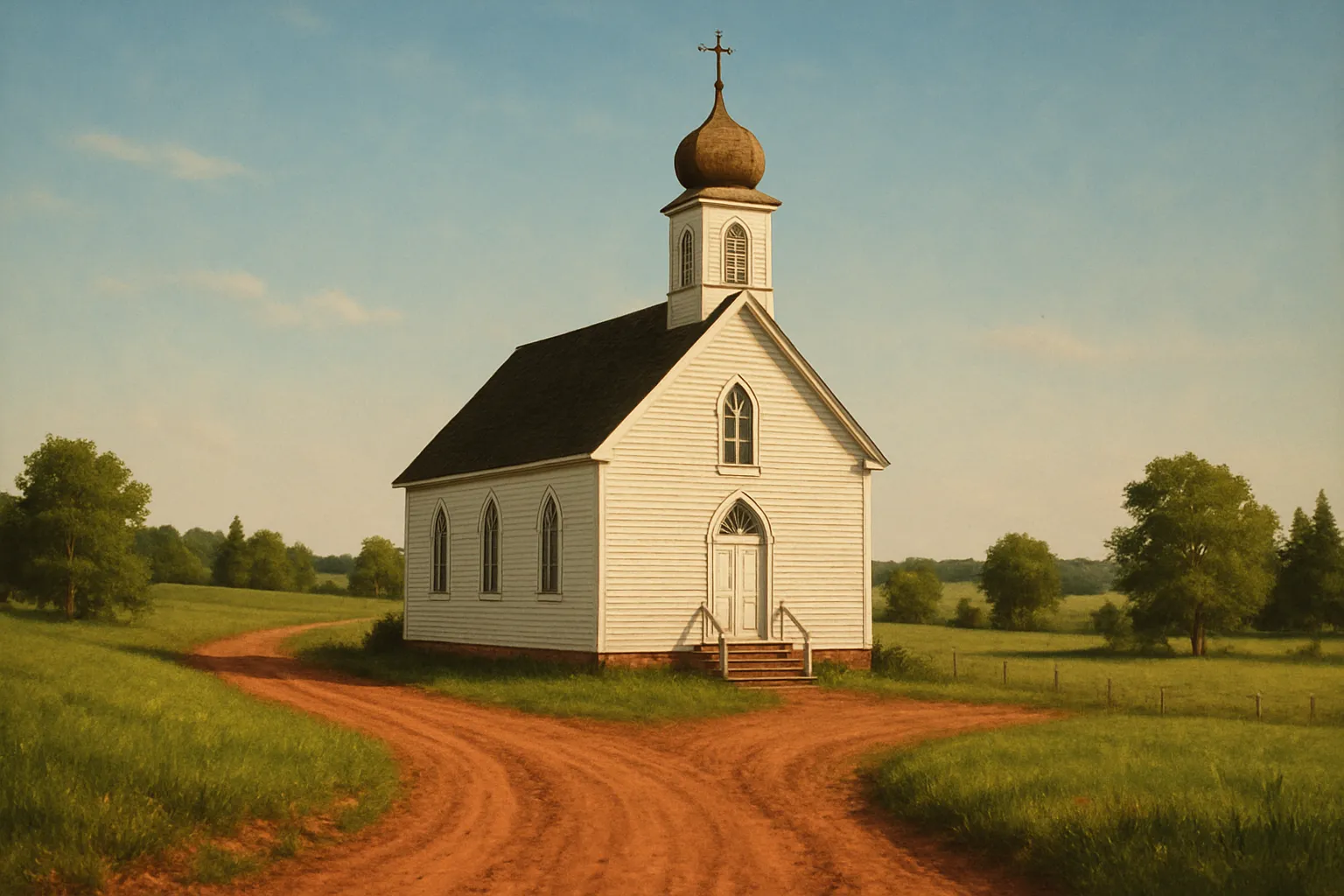
Building a church was among the first community priorities. A church provided not only a place of worship but also a gathering point for the community — a place where the Ukrainian language was spoken, where children learned prayers and hymns in their parents’ tongue, and where the great feasts of the liturgical year were celebrated according to Ukrainian tradition.
The distinctive onion-domed architecture of Ukrainian churches, so iconic on the prairies, also made its modest appearance on PEI, serving as a visible symbol of the community’s presence and identity.
5. Family Names and Their Stories
The Ukrainian families who settled on Prince Edward Island brought surnames that reflected their heritage. These names, often derived from occupations, personal characteristics, or place names in Ukraine, became part of the island’s fabric:
- Lawryniuk — derived from the given name Lavryn (Lawrence), indicating “son of Lavryn”
- Melnyk (Мельник) — meaning “miller,” indicating an ancestor who operated a grain mill
- Krawchuk (Кравчук) — derived from kravets (кравець), meaning “tailor”
- Danchuk — from the given name Dan or Danylo (Daniel), meaning “son of Danylo”
- Lomatski — a surname with roots in a specific locality or geographic feature in Ukraine
These family names, sometimes altered in spelling by immigration officials or anglicized over the generations, can still be found across Prince Edward Island today. Tracing the origins of these surnames back to specific villages in Ukraine is a rewarding aspect of genealogical research. For guidance on beginning this journey, see our article on how to start Ukrainian genealogy research.
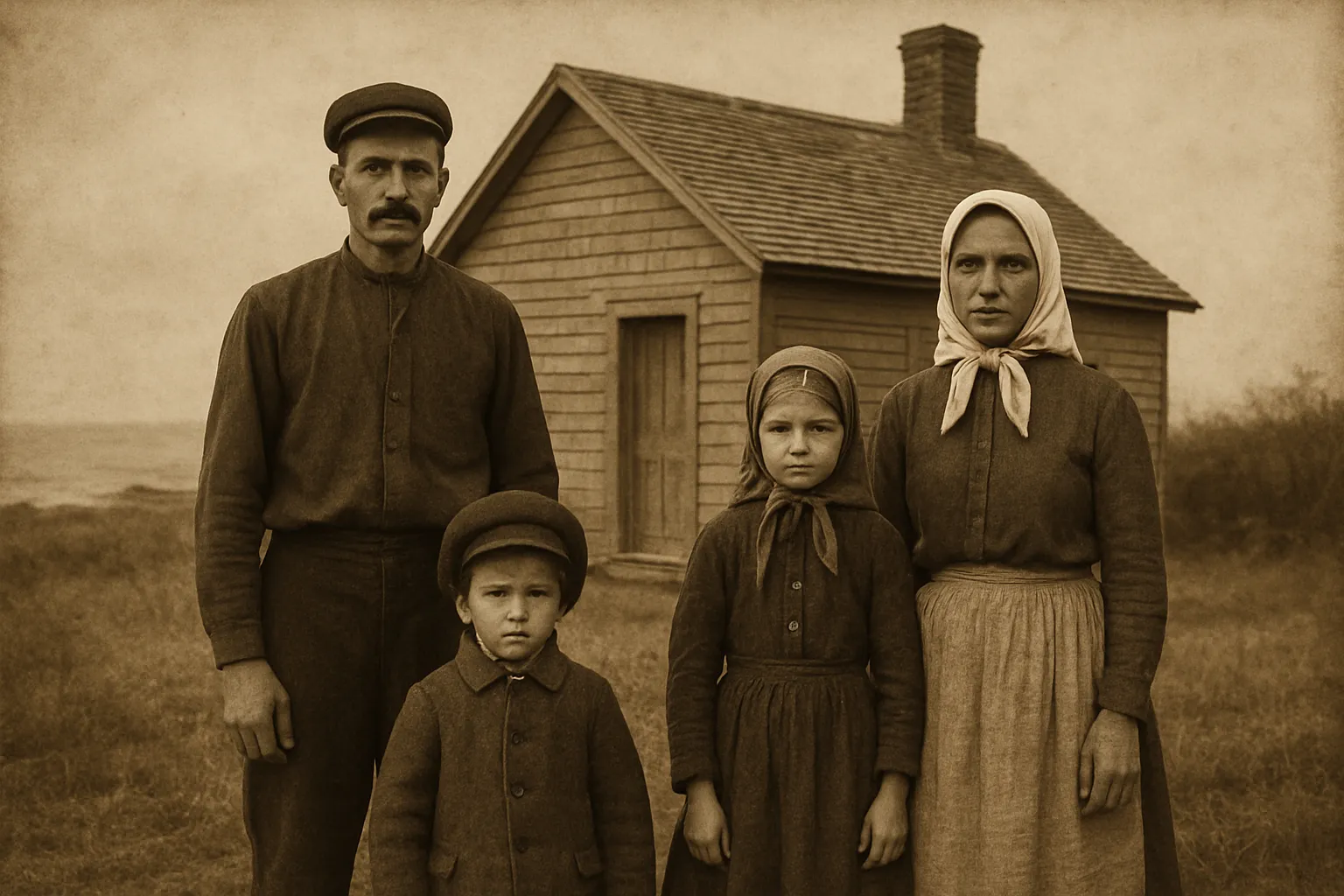
6. How PEI Differs from Prairie Settlement
The Ukrainian experience on Prince Edward Island was fundamentally different from the prairie experience in several important ways:
Scale
On the prairies, Ukrainian settlers formed massive bloc settlements — entire districts where Ukrainian was the dominant language, Ukrainian churches stood in every town, and Ukrainian cultural institutions thrived. In Saskatchewan alone, tens of thousands of Ukrainian families settled in concentrated areas.
On PEI, the Ukrainian community numbered in the dozens of families rather than the thousands. This smaller scale meant less institutional infrastructure — fewer churches, no Ukrainian-language schools, and fewer cultural organizations.
Integration
The smaller community size on PEI led to faster integration with the broader Canadian society. Ukrainian families on the island intermarried with English, Scottish, Irish, and Acadian families more frequently and more quickly than their prairie counterparts. While this enriched the island’s cultural mosaic, it also meant that Ukrainian language and customs were more vulnerable to assimilation.
Economic Patterns
Prairie Ukrainians were overwhelmingly homestead farmers on large tracts of land. PEI’s Ukrainian settlers worked smaller farms and were more likely to diversify into fishing, trades, and other occupations. The island’s economy, with its emphasis on mixed farming and the fishery, shaped a different economic profile from the wheat-dominated prairie experience.
Preserving Identity
Despite these differences, PEI’s Ukrainian community showed remarkable determination in preserving its identity. Families maintained Ukrainian cooking traditions — varenyky (perogies), borshch, holubtsi (cabbage rolls), and the elaborate foods of the Christmas Eve Sviata Vecheria were passed down through generations. The Ukrainian language, though gradually giving way to English, was spoken in homes well into the mid-20th century.
To discover more about Prince Edward Island and its attractions, Voyage Canada offers comprehensive travel guides for those planning to visit this beautiful island province.
7. Community Organizations and Cultural Life
The Ukrainian Canadian Club of PEI
The Ukrainian Canadian Club of PEI has served as the primary community organization, bringing together families of Ukrainian descent for cultural events, commemorations, and social gatherings. The club has organized:
- Ukrainian cultural evenings featuring traditional music, dance, and food
- Commemorative events marking important dates in Ukrainian history, including the Holodomor and Ukrainian Independence Day
- Community dinners that keep Ukrainian culinary traditions alive
- Heritage preservation projects documenting the stories of pioneer families
The Ukrainian Genealogy Group PEI
The Ukrainian Genealogy Group PEI works specifically to preserve and share the family histories of the island’s Ukrainian community. Through genealogical research, oral history projects, and community outreach, the group helps descendants connect with their roots and understand the journey their ancestors undertook.
The group’s work is especially important as the generation that heard stories directly from the immigrant pioneers is aging. Recording these memories and connecting them with documentary evidence from archives in Canada and Ukraine ensures that these stories will survive for future generations.
Cultural Contributions
PEI’s Ukrainian community, though small, has contributed to the island’s cultural richness. Ukrainian Easter egg decorating (pysanky), embroidery (vyshyvanka), and music have been shared at multicultural events across the island. Ukrainian families have also participated actively in PEI’s civic life, contributing to local government, education, business, and community service.
For a deeper exploration of Ukrainian cultural expressions on PEI, see our article on Ukrainian culture, music, and books on PEI.
8. Tracing Your PEI Ukrainian Roots
If you believe you have Ukrainian ancestry connected to Prince Edward Island, several resources can help you trace your family history:
- PEI Provincial Archives — holds vital records, land records, and church registers for the island
- Library and Archives Canada — immigration records, census records, and naturalization papers are available online
- Church records — parish registers from Ukrainian Catholic and Orthodox churches in the region
- Family oral history — talk to older relatives who may remember stories passed down from the pioneer generation
- Community history books — published histories of PEI communities sometimes include information about Ukrainian families
- The Ukrainian Genealogy Group PEI — contact the group for assistance and to connect with other researchers
The story of each Ukrainian family on Prince Edward Island is a thread in a larger tapestry — one that connects a small Atlantic island to villages in Galicia and Bukovyna, and that spans generations of courage, adaptation, and cultural persistence.
9. Looking Forward
Today, the descendants of PEI’s Ukrainian pioneers are fully integrated into island life while maintaining a proud connection to their heritage. New generations are discovering their roots through genealogy research, DNA testing, and cultural exploration. The Ukrainian Canadian Club of PEI and the Ukrainian Genealogy Group PEI continue to serve as bridges between past and present, ensuring that the story of Ukrainian settlement on Prince Edward Island is not forgotten.
The community, though small, remains vibrant. Each perogoy supper, each Easter pysanka, each story shared at a family gathering carries forward the legacy of those determined immigrants who chose Canada’s smallest province as their new home — and made it their own.
Frequently Asked Questions
The first Ukrainian settlers arrived on Prince Edward Island in the early 1900s, primarily between 1905 and 1914, during the second wave of Ukrainian immigration to Canada. Unlike the massive prairie settlement, PEI received a smaller but significant number of Ukrainian families who were drawn by opportunities in farming and fishing.
Most Ukrainian settlers on Prince Edward Island came from Galicia (particularly the Ternopil, Lviv, and Ivano-Frankivsk regions) and Bukovyna (now Chernivtsi oblast). These were areas under Austro-Hungarian rule where economic hardship and land shortages pushed many families to seek a new life in Canada.
Prominent Ukrainian family names on PEI include Lawryniuk, Melnyk, Krawchuk, Danchuk, and Lomatski, among others. Many of these names can still be found across the island today, reflecting the enduring presence of the Ukrainian community.
While tens of thousands of Ukrainians settled on the Canadian prairies through homestead grants, PEI received far fewer Ukrainian immigrants. The island's settlement pattern was more dispersed, with families integrating into existing farming and fishing communities rather than forming the large Ukrainian bloc settlements common in Manitoba, Saskatchewan, and Alberta.
Yes, the Ukrainian Canadian Club of PEI continues to serve the community, organizing cultural events, commemorations, and social gatherings. The Ukrainian Genealogy Group PEI also works to preserve family histories and connect descendants with their ancestral roots.