1. Before the Great Migration
Long before the recognized waves of Ukrainian immigration, a small number of Ukrainians had already set foot on Canadian soil. As early as 1817, Ukrainians served as mercenary troops in Lord Selkirk’s hired Swiss de Meuron Regiment, entering Manitoba during the early colonial period.
However, these early arrivals did not establish permanent Ukrainian communities. The true story of Ukrainian settlement in Canada begins in the final decade of the 19th century, driven by desperation in the old country and hope in the new.
2. The First Wave (1891-1914) — The Pioneers
The Very Beginning
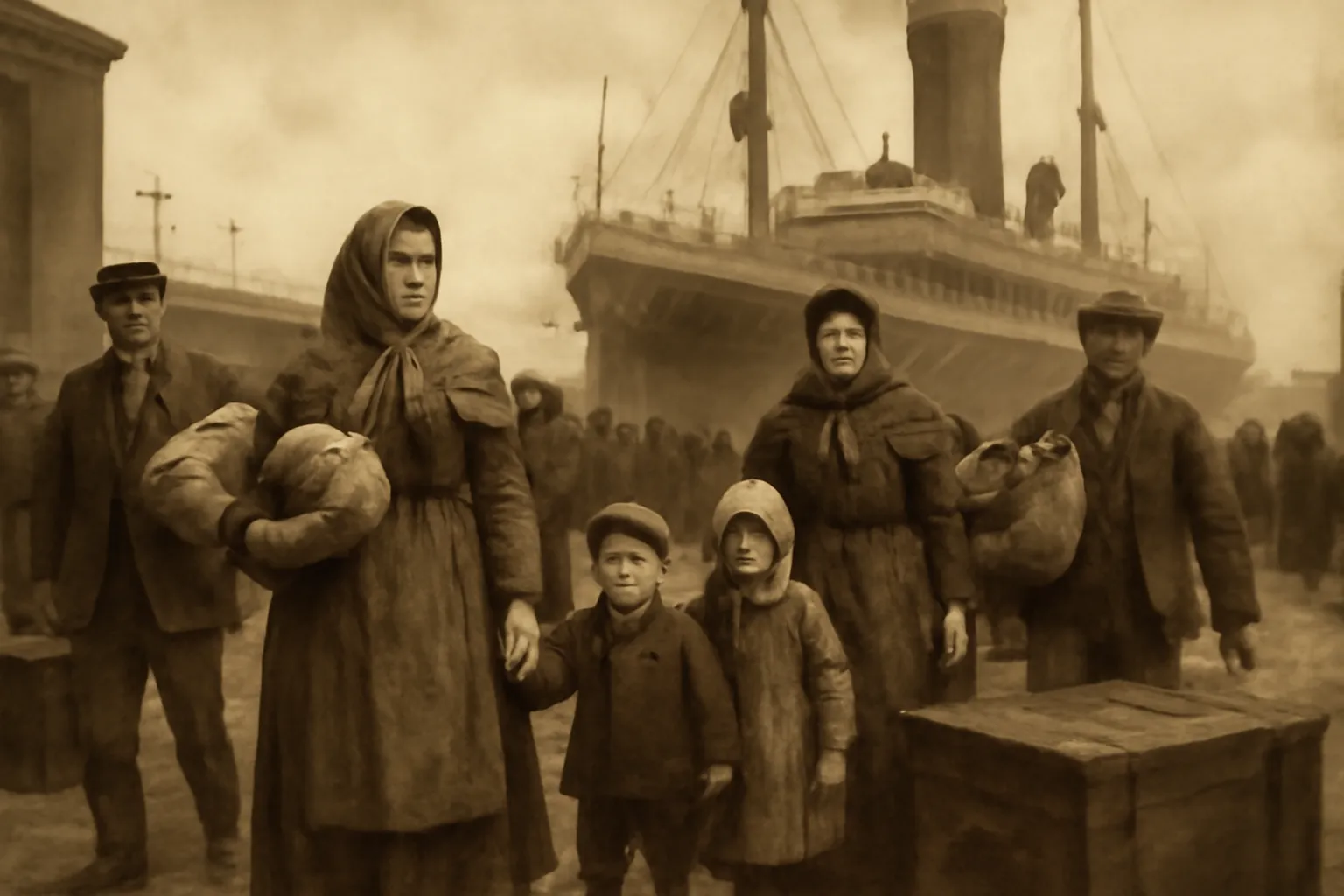
On September 7, 1891, the first recognized Ukrainian settlers arrived at the port of Montreal. Ivan Pylypow and Wasyl Eleniak from the village of Nebyliw in the Kalush district of Galicia are credited as the pioneers who opened the door for hundreds of thousands to follow.
Their journey was the result of growing awareness in Western Ukraine about opportunities in Canada, where the government was actively seeking settlers to populate the vast prairies.
Dr. Josef Oleskow’s Role
The single most important figure in organized Ukrainian immigration to Canada was Dr. Josef Oleskow, a professor of agriculture at the Academic Gymnasium in Lviv. In 1895, Oleskow visited Canada to assess conditions for potential settlers.
He published two influential pamphlets:
- “O emigratsii” (About Emigration) — providing practical information about Canada
- “Pro vil’ni zemli” (About Free Lands) — describing the homestead opportunities
These publications, distributed throughout Galicia and Bukovina, sparked a mass movement. Oleskow negotiated with Canadian immigration authorities and helped organize the first large groups of settlers.
Settlement Patterns
The Canadian government offered free 160-acre homesteads to settlers willing to farm the prairies. Ukrainian immigrants, mostly peasant farmers from Galicia and Bukovina, were ideally suited for this challenge.
Major bloc settlements were established in:
- Alberta — around Edna-Star, Mundare, Vegreville, and Two Hills
- Manitoba — in the Interlake region, Dauphin, and the Riding Mountain area
- Saskatchewan — near Yorkton, Canora, and the Quill Lakes area
By 1914, approximately 170,000 Ukrainians had arrived in Canada, forming the largest Ukrainian diaspora community in the world at that time.
For detailed records of these communities, see our directory of community and family histories across Canadian provinces.
Life on the Homestead
The early years were brutally difficult. Settlers faced:
- Dense bush and forest that had to be cleared by hand
- Extreme Canadian winters unlike anything they had known
- Isolation from other communities and limited access to supplies
- Language barriers and occasional hostility from established settlers
- The challenge of building homes, barns, and churches from scratch
Despite these hardships, Ukrainian settlers built thriving communities, established churches, schools, and cultural organizations, and transformed the Canadian prairies into productive farmland.
Ukrainian Place Names in Canada
The depth of Ukrainian settlement on the prairies is written into the Canadian map itself. Dozens of towns, villages, and geographic features bear Ukrainian names — a lasting testament to the communities that pioneers carved out of the wilderness:
- Ukraina, Saskatchewan — a hamlet that proudly carries the name of the homeland
- Vilna, Alberta — meaning “free” in Ukrainian, reflecting the settlers’ hopes for a new life
- Kolomea, Alberta — named after the city of Kolomyia in Western Ukraine, from where many settlers emigrated
- Shandro, Alberta — named after Stefan Shandro, one of the earliest Ukrainian homesteaders in the area, whose family became prominent in provincial politics
- Borshchiv, Alberta — named after the town of Borshchiv in Ternopil Oblast, a reminder of the specific origins of the local settlers
Other Ukrainian-inspired place names include Vegreville, Mundare, and Myrnam in Alberta, as well as Canora (an abbreviation of “Canadian Oriental”) and Ituna in Saskatchewan. These names serve as permanent markers of the Ukrainian contribution to the building of Western Canada.
3. The Second Wave (1920-1939) — Between the Wars
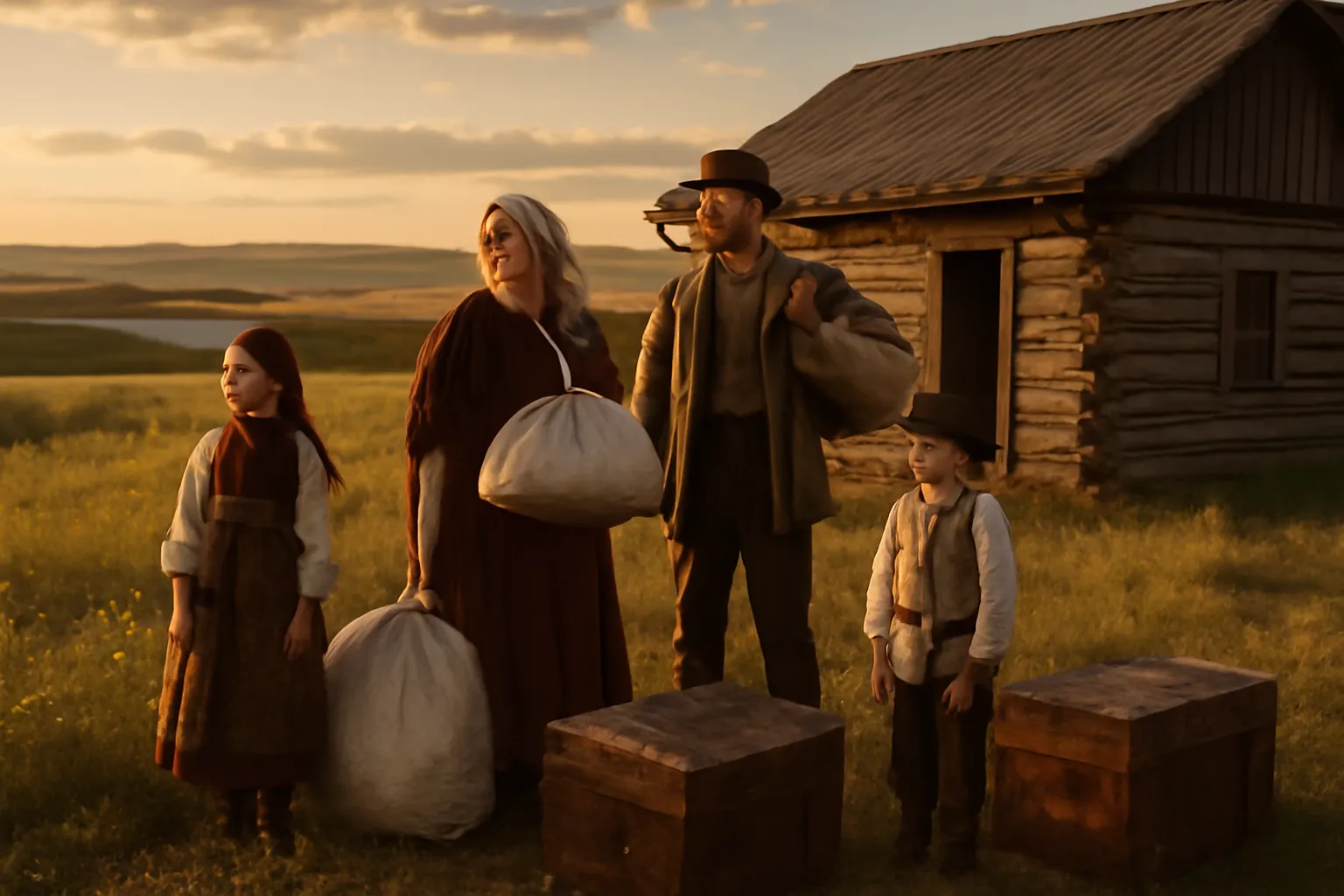
After World War I and the failed Ukrainian war of independence, a second wave of approximately 70,000 Ukrainians came to Canada between 1920 and 1939. Many were fleeing severe hardship in their homeland, including political persecution, economic devastation, and — during the early 1930s — the horrific man-made famine known as the Holodomor, which killed millions in Soviet-controlled Ukraine.
Changed Circumstances
This wave was different from the first in several important ways:
- More politically aware — many had fought for Ukrainian independence and were fleeing political persecution
- More educated — included intellectuals, teachers, clergy, and professionals alongside farmers
- More urban — while many still settled on farms, growing numbers moved to cities like Winnipeg, Edmonton, and Toronto
- More organized — established political, cultural, and educational organizations
Building Institutions
The interwar immigrants strengthened Ukrainian-Canadian institutional life enormously:
- Ukrainian churches expanded across the country
- Cultural organizations like the Ukrainian National Federation and Ukrainian Canadian Committee were founded
- Ukrainian-language newspapers flourished, connecting communities across vast distances
- Prosvita reading halls and community centres became focal points for cultural life
4. The Dark Chapter — World War I Internment
An essential but painful chapter in Ukrainian-Canadian history is the internment of Ukrainian Canadians during World War I (1914-1920).
Because many Ukrainian immigrants came from the Austro-Hungarian Empire — an enemy of Britain and Canada during WWI — approximately 8,579 men, women, and children were interned in 24 camps across Canada. Thousands more were required to register as “enemy aliens” and report regularly to authorities.
The internees were used as forced labour in national parks and on infrastructure projects. Many lost their property, businesses, and savings.
Notable Internment Camps
Among the 24 camps, several stand out for their scale and harshness:
- Spirit Lake, Quebec — one of the largest and longest-operating camps (1915-1917), located in the remote Abitibi region. Families with women and children were held here. The Spirit Lake Internment Interpretive Centre now preserves this history.
- Castle Mountain, Alberta — situated in what is now Banff National Park, internees were forced to build roads and infrastructure that tourists enjoy today. The camp operated from 1915 to 1917 in brutal mountain conditions.
- Kapuskasing, Ontario — originally a temporary camp that became one of the most notorious sites, operating from 1914 to 1920. Internees cleared dense boreal forest and built what would later become the town of Kapuskasing.
Other camps were located at sites including Brandon (Manitoba), Vernon (British Columbia), Jasper (Alberta), and Petawawa (Ontario). In total, internees performed labour valued at millions of dollars — wealth they were never compensated for.
This injustice was not officially acknowledged until 2005, when the Canadian government established the Canadian First World War Internment Recognition Fund.
5. The Third Wave (1947-1954) — Displaced Persons
After World War II, approximately 35,000 Ukrainian displaced persons (DPs) came to Canada, fleeing both Nazi devastation and Soviet occupation.
Profile of the Third Wave
These immigrants were:
- Highly educated — many were professionals, scholars, artists, and former military officers
- Politically motivated — strongly anti-Soviet and committed to Ukrainian independence
- Culturally active — brought a renewed energy to Ukrainian-Canadian cultural life
They established new organizations, publishing houses, and educational institutions. Many settled in Ontario cities, particularly Toronto, where they built a vibrant urban Ukrainian community.
The Ukrainian community in Toronto became one of the most active centres of diaspora cultural life. Today, organizations in the Toronto area continue this tradition of community building and cultural preservation.
6. The Fourth Wave (1991-Present) — Independent Ukraine
Following Ukraine’s declaration of independence on August 24, 1991, a new wave of immigration began. These newcomers came from a now-independent Ukraine and included:
- Economic migrants seeking better opportunities
- Professionals and academics attracted by Canadian institutions
- Family reunification immigrants joining established Ukrainian-Canadian families
- Recent arrivals fleeing the conflict that began in 2014 and escalated in 2022
This ongoing wave has reinvigorated Ukrainian-Canadian communities with fresh cultural connections to the homeland and new perspectives on Ukrainian identity.
7. Ukrainian Settlement in the Atlantic Provinces
While the prairies received the vast majority of Ukrainian settlers, smaller but significant communities also took root in Canada’s Atlantic provinces — a chapter often overlooked in the broader immigration narrative.
Prince Edward Island
Ukrainian families began settling on Prince Edward Island in the early 20th century, drawn by opportunities in farming and fishing. Though small in number compared to the prairie communities, PEI’s Ukrainian settlers built a tight-knit community that has endured for generations. Their story is explored in detail in our article on Ukrainian settlers on Prince Edward Island.
Nova Scotia
Ukrainian immigrants arrived in Nova Scotia primarily during the second and third waves. Many found work in the coal mines of Cape Breton and the steel mills of Sydney. The Ukrainian community in Halifax grew steadily through the mid-20th century, and a Ukrainian Orthodox church was established to serve the faithful.
New Brunswick
In New Brunswick, Ukrainian settlers found employment in the lumber industry and agriculture. Small communities formed in Moncton, Saint John, and Fredericton. Like their counterparts elsewhere in the Maritimes, these families maintained their cultural traditions despite being far from the large Ukrainian centres on the prairies.
The Atlantic Ukrainian communities may have been small, but they played an important role in preserving Ukrainian identity on Canada’s eastern shore and welcoming new waves of Ukrainian arrivals over the decades.
8. Ukrainian Canadians Today
Today, approximately 1.4 million Canadians claim Ukrainian ancestry, making it one of the largest ethnic groups in the country.
Ukrainian-Canadian Contributions
Ukrainian Canadians have made extraordinary contributions to every aspect of Canadian life:
- Politics — including Governor General Ray Hnatyshyn and numerous Members of Parliament
- Arts and Culture — writers, musicians, dancers, and visual artists who have enriched Canadian culture
- Agriculture — transforming the prairies into one of the world’s great grain-producing regions
- Education — establishing the Canadian Institute of Ukrainian Studies at the University of Alberta
Preserving Heritage
Ukrainian-Canadian heritage is preserved through:
- Museums — including the Ukrainian Cultural Heritage Village in Alberta
- Festivals — such as Dauphin’s National Ukrainian Festival in Manitoba
- Churches — both Catholic and Orthodox parishes across the country
- Organizations — including the Ukrainian Canadian Congress and genealogy groups like ours
The story of Ukrainian immigration to Canada is one of hardship, perseverance, and extraordinary achievement. From the first pioneers who arrived in 1891 to today’s newest Canadians from Ukraine, each generation has added to the rich tapestry of Ukrainian-Canadian life.
9. Timeline Summary
| Year | Event |
|---|---|
| 1817 | First Ukrainians enter Manitoba (de Meuron Regiment) |
| 1891 | Ivan Pylypow and Wasyl Eleniak arrive at Montreal |
| 1895 | Dr. Josef Oleskow visits Canada, publishes settlement guides |
| 1896-1905 | Peak years of first-wave immigration to the prairies |
| 1914-1920 | World War I internment of Ukrainian Canadians |
| 1920-1939 | Second wave: political refugees and economic migrants |
| 1940-1945 | Ukrainian Canadians serve with distinction in World War II |
| 1947-1954 | Third wave: displaced persons from post-war Europe |
| 1991 | Ukraine declares independence; fourth wave begins |
| 2005 | Canadian government acknowledges WWI internment |
| 2022 | Canada welcomes Ukrainians fleeing the expanded conflict |
Frequently Asked Questions
The first Ukrainian settlers arrived at Montreal on September 7, 1891. Ivan Pylypow and Wasyl Eleniak from the village of Nebyliw in Galicia are generally recognized as the first Ukrainian immigrants to Canada, though Ukrainians had entered Manitoba as early as 1817 as part of Lord Selkirk's regiment.
Over 500,000 Ukrainians immigrated to Canada across four major waves: approximately 170,000 between 1891-1914, about 70,000 between 1920-1939, roughly 35,000 displaced persons after World War II, and ongoing immigration since 1991. Today, approximately 1.4 million Canadians claim Ukrainian ancestry.
The primary reasons were poverty, lack of farmland, and political oppression under the Austro-Hungarian and Russian Empires. Dr. Josef Oleskow, a professor in Lviv, actively promoted Canadian settlement after visiting in 1895. Canada's offer of free 160-acre homesteads was a powerful draw for land-hungry Galician and Bukovynian peasants.
The majority settled in the prairie provinces of Alberta, Saskatchewan, and Manitoba, drawn by the offer of free homestead land. Ukrainian bloc settlements were established in these provinces. Smaller communities also formed in Ontario, British Columbia, Quebec, and the Atlantic provinces including Prince Edward Island.
Yes, dozens of Canadian towns, villages, and geographic features bear Ukrainian names, reflecting the deep roots of Ukrainian settlers. Notable examples include Ukraina in Saskatchewan, Vilna and Kolomea in Alberta, Shandro in Alberta (named after settler Stefan Shandro), and Borshchiv in Alberta. These names serve as lasting reminders of the communities that Ukrainian pioneers built across the prairies.